Forced Marriage and Violence against Women in Morocco: Legislations Failing to Put an End to Violations
Published by Iman Bakit
on December 2018
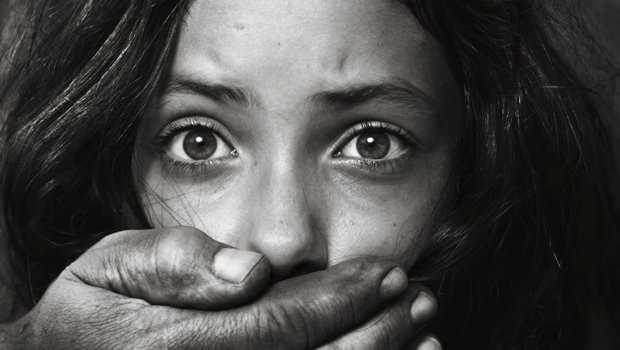
Violence against women has been recognized by the world as a human rights violation, a gender based discrimination and an attack on the freedom and dignity of women and girls all over the world. According to the first globally accepted definition of VAW (VIOLENCE AGAINST WOMEN), the United Nations Declaration on the Elimination of Violence against Women (DEVAW), it is defined as ‘all acts of gender-based violence that result in, or are likely to result in, physical, sexual, psychological or economic harm or suffering to women, including threats of such acts, coercion or arbitrary deprivation of liberty, whether occurring in public or in private life’.
Morocco is a progressive nation with pioneering institutional and civil society experience among other nations in the Arab world. This is with reference to social campaigns in empowering women and girls and promoting their situations and rights, which they have carried out over the years including community mobilization, awareness-raising and training. Also, in 2011, the constitution made the position of the country clear on the issue of discrimination, particularly gender based discrimination and discrimination on grounds of personal circumstances. Article 22 of the constitution made prohibits any suppression of women, stating that everyone will have a right to their physical and moral integrity and it will not be undermined by any form of harsh treatment under any circumstances by any person, private of public. The section also prohibits infliction of pain by one upon another, under whatsoever pretext.
However, violence against women and girls prevents them from enjoying the rights they have under the Constitution, the Family Code and other relevant legislations. Fighting violence against women and girls is a long-term project, given the impunity of perpetrators and the large social acceptance of gender-based violence that is a manifestation of “historically unequal power relations between men and women … [and] one of the crucial social mechanisms by which women are forced into a subordinate position compared with men”
Morocco has greatly improved the social and legal framework surrounding sexual and reproductive health in the last decade. For example, the Family Law or Moudawana has finally been put up. Also, the minimum age of marriage for girls was increased and equal rights within a family are championed. Despite all this, forced marriage and violence is still a major issue.
Examples of Violence
The most prevalent form of abuse can be agreed to be Child Marriage, which is the marrying off of girls before the legal age of 18. More than 700 million girls alive, between the ages of 18 to infinity were married before the age of 18. Such practices are widespread, particularly in low human development countries, where 39 percent of women aged 20 to 24 were married before their 18th birthday, despite and increasing calls for the end.
Although boys are also married as children, girls are mostly affected by this practice, the feel is no better as they are also often married off to men significantly older than them. In Morocco, the practice is seemingly accepted to the society, until recently when human and civil rights organizations started raising dust. Marrying girls before they are legal is one of the prevalent forms of violence among many others, as defined in the General Assembly Resolution on “Crime prevention and criminal justice measures to eliminate violence against women”:
Physical violence: ‘intentional use of physical force with the potential for causing death, injury or harm. It includes, but is not limited to, scratching, pushing, shoving, throwing, grabbing, biting, choking, shaking, poking, hair pulling, slapping, punching, hitting, burning, the use of restraints or one’s body size or strength against another person, and the use, or threat to use, weapons.’
Sexual violence: ‘any non-consensual sexual act, attempt to obtain a sexual act, unwanted sexual comments or advances, or acts to traffic, or otherwise directed, against a person’s sexuality, by any person regardless of their relationship to the victim, in any setting, including but not limited to home and work.’
Psychological abuse/violence: ‘any act or omission that damages the self-esteem, identity or development of the individual’ or ‘behaviour that is intended to intimidate and persecute, and takes the form of threats of abandonment or abuse, confinement to the home, surveillance, threats to take away custody of the children, destruction of objects, isolation, verbal aggression and constant humiliation.’
In general, here are some situations that may promote Violence against women, based on their immediate circles:
Family: There is a high rate of this. Arguably the most common form of intimate partner violence (IPV)—that is, violence from spousal beatings, sexual abuse or marital rape. Such violence occur in families within their intimate circle being partners, most times men inflicting pain on the women. There is also violence between other family members such as child abuse and the abuse of the elderly
Community: This occurs when violence occurs between individuals unrelated by blood or kin. The offenders in this case may or may not be familiar with the victims. Such violence takes place place in community situations outside the immediate residence, for example in educational institutions, streets or public transportation. Forms of such violence include: verbal abuse, physical assault, sexual intimidation, sexual abuse and rape among others.
Workplace: Tis is a specific form of violence, which occurs, in the working community, e.g. farms, offices, factories etc, between workers in or outside the given workplace. Most times, it deals with male superiors maltreating the junior female workers. Forms of such violence include: verbal abuse, physical assault, sexual intimidation, sexual abuse and rape among others.
HOW CAN MOROCCO END THIS VIOLENCE?
A huge effort is being made to end the violence against women in Morocco, including the prohibition on forced marriage (Article 503-2-1) and making the offence punishable with prison terms between six months and one year; or fines ranging from 10,000 to 30,000 Moroccan dirhams (1,030 to 3,100 US dollars). There is also a strong ban against
They also include embezzlement of resources and funds meant for the spouse, children or divorce-related arrangements (Article 526-1), with an attached punishment of prison terms from one to six months and fines between 2,000 and 10,000 Moroccan dirhams (200 and 1,030 US dollars). Another offence as stipulated is the eviction of a spouse from a marital home, punishable with fines between 2,000 and 5,000 Moroccan dirhams (about 200 and 500 US dollars).
Here are some steps Morocco can take:
- Redefining the law to be clear and concise, and also implementing them by sentencing offenders and caring for victims.
- Strictly criminalizing rape in all forms, including marital rape.
- Providing victims with the right to adequate representation in court, and ensuring they are protected from external or retributory attacks.
- Forming creative means to curb the misinterpretation of information and communication technology and the use of social media e.g. hate speech to threaten the dignity and psychological integrity of women.
- Guaranteeing support and awareness of professionals and other relevant actors in effecting these laws and bringing offenders to book.
 Makers of Hope